Serving Burnaby, BC

Garage Door Replacement Decision Guide

Insulated Vs. Non-Insulated Garage Doors For Burnaby Homes

Choose the construction around the garage’s connection to the home, daily use, comfort goals and complete installed performance—not one rating by itself.

Best Starting PointHow the garage is actually used
Compare CarefullyWhole door, seals and windows
Service AreaBurnaby, British Columbia

Quick Answer

Insulation Is A Use-Case Decision

An insulated garage door is often worth closer consideration when the garage is attached to the home, used as a workshop, entered frequently or located beside occupied rooms. The added layers can also change section stiffness and sound characteristics. Those benefits are practical, but they do not mean every Burnaby garage needs the highest available rating.

A basic non-insulated door may remain suitable for a detached garage used mainly for vehicle or seasonal storage when temperature moderation is not a priority. The correct choice still needs to fit the opening, use compatible tracks and springs, seal appropriately and meet the homeowner’s design and maintenance goals.

Keep expectations realistic: garage-door insulation slows heat transfer; it does not heat or cool the garage. Walls, ceiling, air leakage, windows and the floor interface also influence the result.

Compare The Construction

What Changes Between Door Types?

“Insulated” describes several possible constructions. Ask for the layer build-up and product data rather than treating all insulated doors as equivalent.

Single-Layer Door

A basic door may use one exterior skin without an insulation core or interior backing. It can be lighter and simpler, but provides less section insulation and a different feel in operation.

Polystyrene-Insulated Door

Rigid insulation panels fit within the door sections. Products vary in thickness, interior backing and published ratings, so compare the exact model rather than the material name alone.

Polyurethane-Insulated Door

Foam is introduced between door skins and can bond to the section. Many product lines publish higher section ratings for this construction, but the complete assembly still matters.

Ratings Without The Confusion

R-Value And U-Factor Measure Different Things

R-value describes resistance to heat flow through a material or door section; a higher value indicates greater resistance under the stated basis. U-factor describes heat transfer through a complete tested assembly; a lower value indicates less heat transfer. A section R-value cannot simply be inverted and treated as the complete door’s U-factor.

When comparing products, confirm whether the number applies to the insulation, one section or the complete door assembly. Then check what happens when windows, section joints, perimeter seals and the bottom interface are included.

Decision guide comparing insulated and non-insulated garage doors for different garage uses
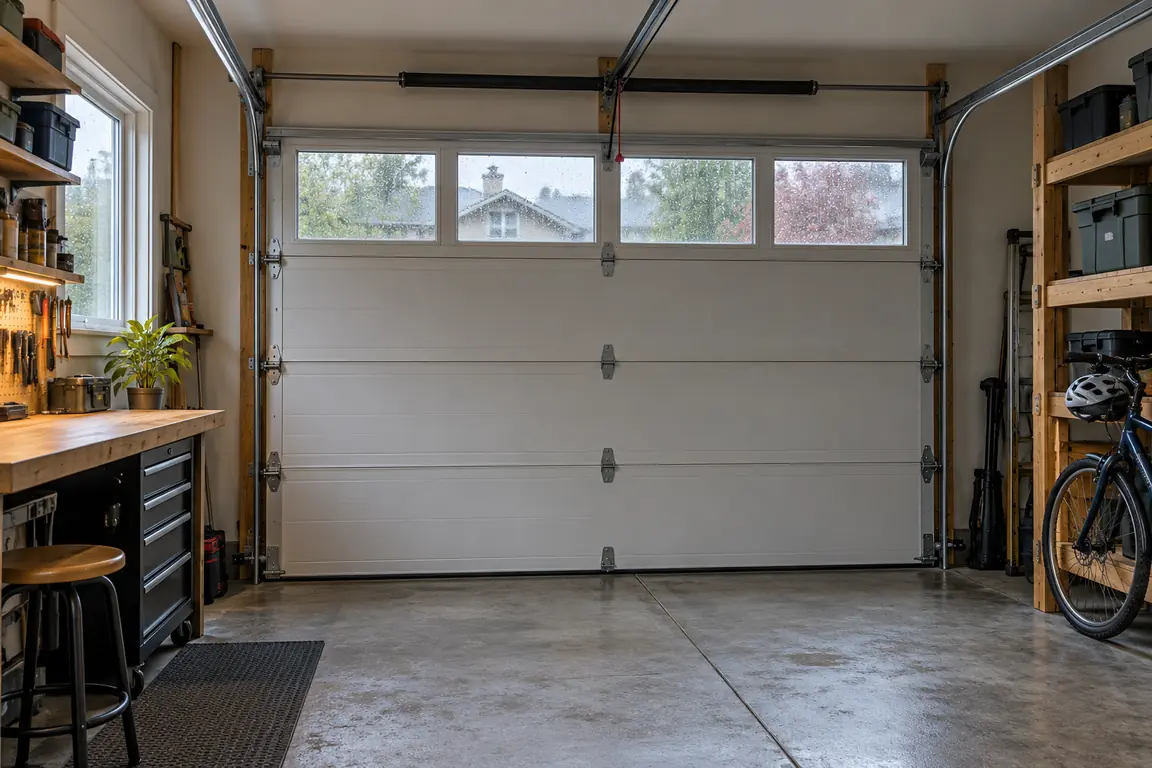
Insulated sectional garage door beside a workshop area in an attached Burnaby garage
An attached or regularly used garage may give insulation, sealing and quieter construction more practical value.

Whole-Garage Context

Where Insulation Can Help Most

  • Attached garages: the garage shares a wall or ceiling with occupied space.
  • Regularly used spaces: the garage supports hobbies, projects or household access.
  • Noise priorities: construction and section stiffness may affect vibration and sound.
  • Temperature-sensitive use: comfort matters more than in simple vehicle storage.
  • Large street-facing openings: the door forms a substantial part of the enclosure.

Insulation should still be considered with the rest of the envelope. A high section rating cannot correct missing perimeter seals, large air gaps or uninsulated walls.

Installed Performance

Seals, Windows And Fit Can Change The Result

Perimeter And Bottom Seals

Side, top and bottom seals limit air and debris paths around the opening. They must suit the door and meet the floor consistently without preventing safe travel.

Section Joints

The interfaces between sections affect air movement as the door closes. Product design, installation and hardware alignment influence how evenly the sections meet.

Windows And Glazing

Windows add daylight and change appearance, privacy and thermal performance. Review the selected glazing as part of the completed configuration.

Floor And Drainage

An uneven slab or water moving toward the opening can create problems that insulation does not solve. Door fit and site drainage need separate attention.

Walls And Ceiling

The door is only one surface. Uninsulated walls, ceiling gaps and air leakage elsewhere can limit the practical change from a new door.

Installation Accuracy

Opening measurements, track alignment, balanced movement and seal contact all affect how the selected door performs in daily use.

Burnaby Decision Factors

Choose For The Property And Exposure

Burnaby homes include detached garages, attached garages, townhomes and strata properties. Wet-season conditions make seal condition, finish care and water management relevant, while the garage’s connection to the home determines how much thermal performance matters.

An Insulated Door May Be More Relevant When

  • The garage shares walls or ceiling with living space
  • The space is used for projects or household access
  • Quieter, stiffer sections are preferred
  • The existing door is being replaced for broader performance goals

A Non-Insulated Door May Still Be Practical When

  • The garage is detached and minimally occupied
  • Temperature moderation is not a goal
  • A simple door meets fit, use and appearance needs
  • Budget is better directed to higher-priority site work

System Compatibility

Added Door Weight Must Be Planned

Insulated construction, interior backing, windows and decorative overlays can change the completed door weight. Springs must be specified for that weight and the chosen track geometry. The automatic opener must then be checked for the correctly balanced door, its required attachment and safe travel.

Do not assume the old hardware remains suitable because the opening size is unchanged. Review the companion guide on whether you can reuse garage door tracks, springs and the opener before finalizing a replacement scope.

Cost Without A False Starting Price

What Changes The Insulation Upgrade Cost?

The cost difference depends on door size, number of layers, insulation type, interior backing, windows, finish and required hardware. A heavier or differently configured door can also change springs, tracks or opener work. Compare written scopes rather than relying on a single advertised price.

Door Construction

Single-, double- and multi-layer designs have different material and manufacturing requirements.

Windows And Finish

Glazing, decorative options, custom colours and overlays change both performance and price.

Installation Scope

Removal, framing, tracks, springs, seals, opener compatibility and site access affect the complete quote.

Common Questions

Insulated Garage Door FAQs

Is an insulated garage door always worth it in Burnaby?

Not always. It is usually more relevant for attached garages, regularly used workspaces and openings where comfort, sound and section rigidity matter. A detached, minimally used garage may place more value on other features.

What is the difference between R-value and U-factor?

R-value describes resistance to heat flow through a material or section, while U-factor describes heat transfer through the complete tested assembly. Higher R-value and lower U-factor generally indicate better thermal performance, but the ratings should not be treated as identical.

Is polyurethane better than polystyrene garage door insulation?

Polyurethane foam can provide a higher published thermal rating and bond to the door skins, while polystyrene panels can provide a practical insulated construction at a different cost and performance level. Compare complete product specifications.

Will an insulated garage door make the garage warm?

Insulation can slow heat transfer, but it does not create heat. The result also depends on walls, ceiling, windows, perimeter seals, floor interface, air leakage and how the garage is used.

Do garage door windows reduce insulation performance?

Windows can change whole-door thermal performance and air-tightness. Compare the chosen glazing and completed door rating rather than assuming the solid-section rating applies unchanged.

Does a heavier insulated door need different springs or an opener?

It may. The spring system must match the completed door weight and geometry, and the opener must be checked for compatibility, balance, attachment and safe travel.

Garage Door Replacement In Burnaby

Compare Complete Door Specifications

Share how the garage is connected to the home, how you use it and what you want to improve before choosing a construction.