Serving Burnaby, BC

Garage Door Replacement System Guide

Can You Reuse Garage Door Tracks, Springs And An Opener?

Sometimes an opener can remain, but tracks, springs and attachment hardware must be evaluated against the new door and manufacturer instructions—not assumed to fit.

TracksMatch the specified door system
SpringsMatch completed weight and geometry
OpenerVerify condition, attachment and safety

Quick Answer

Do Not Treat The New Door As An Isolated Panel

A sectional garage door, tracks, rollers, cables, drums or pulleys, springs and automatic opener operate as one connected system. A component that worked with the old door is not automatically suitable for a replacement with different thickness, weight, reinforcement or track requirements.

Many replacement door packages are designed with their own tracks, springs and hardware. An existing opener may sometimes be retained, but only after the new door’s compatibility, balance, top-section reinforcement, rail position, travel and safety response are checked.

Safety: do not remove or adjust springs, cables, drums or bottom brackets. These parts can remain under significant tension even when the door is closed.

One Connected System

What Must Match Before Components Are Retained?

Compatibility map for replacement garage door tracks, springs and automatic opener

Track Compatibility

Why Old Tracks Are Not Automatically Reusable

The opening width and height do not fully define a track system. Vertical track length, horizontal radius, lift type, roller size, brackets, flag angles, fasteners and supporting structure all affect how the door travels.

Door Thickness And Roller Position

A different section construction can change how the rollers and hinges position the door relative to the jamb and horizontal track.

Track Radius And Headroom

Standard-lift, low-headroom and other arrangements use different geometry. Ceiling obstructions and opener position must be measured.

Hardware And Instructions

Manufacturers specify the compatible track and hardware package for each door. Mixing unapproved components can affect fit, operation and applicable warranty terms.

Practical rule: use the new door manufacturer’s specified track and hardware unless the written product instructions explicitly support another configuration.

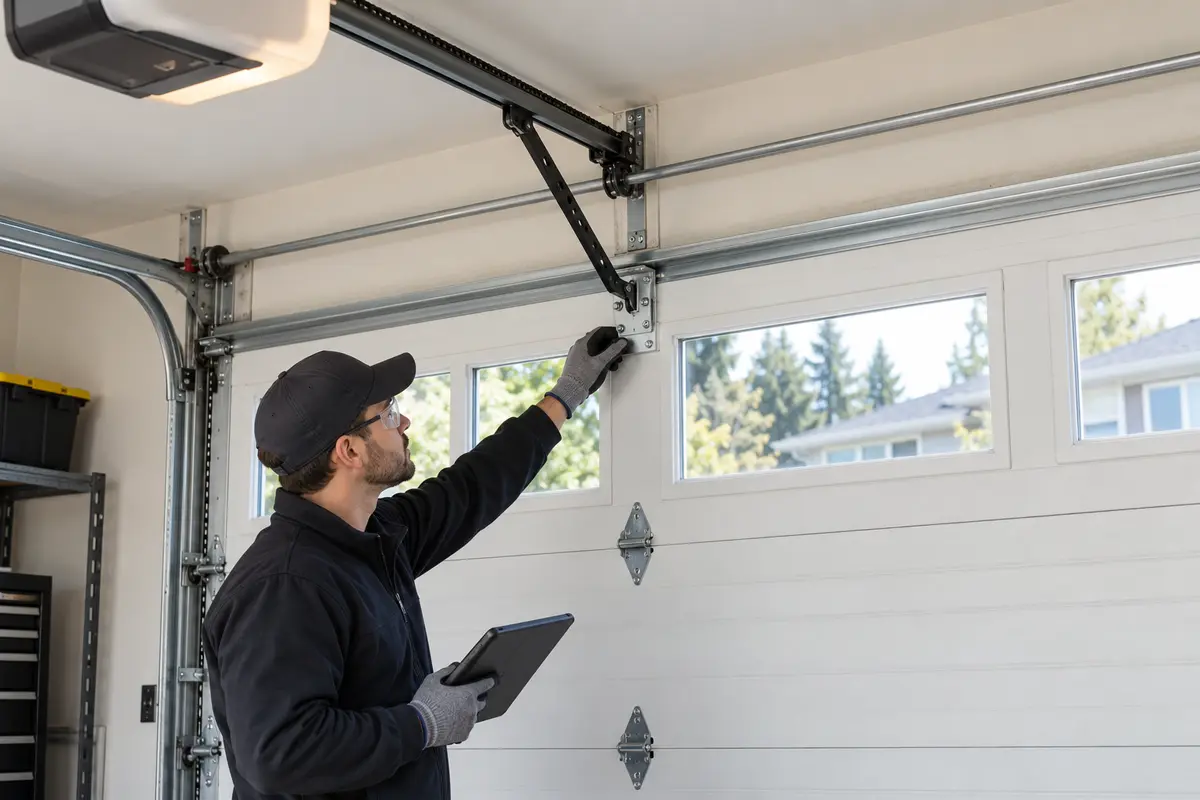
Technician inspecting top-section reinforcement and opener bracket on a replacement garage door
Opener reuse depends on a compatible reinforced attachment, correct rail position, balanced door and verified safety response.

Spring Matching

Springs Must Match The Completed Door

Garage door springs counterbalance the actual moving door. The required specification depends on completed weight, door height, track geometry and the drum or pulley arrangement. Windows, insulation, overlays and reinforcement can all change the load.

An old spring is not proven compatible because it fits the shaft or because the new door has the same nominal opening size. The new system must be selected and balanced for the finished configuration.

  • Do not weigh or lift an unsecured door yourself.
  • Do not loosen spring set screws or cable drums.
  • Do not operate a door that is crooked, unusually heavy or off track.

Opener Reuse

When The Existing Opener May Remain

An existing opener can sometimes be reconnected when it is in suitable condition and compatible with the new, correctly balanced door. The decision should include more than motor power.

Door Size And Configuration

Confirm the opener is intended for the new door’s size, type and required travel. Door balance remains the spring system’s job.

Rail And Mounting Position

The rail, header bracket, ceiling supports and door arm must align with the new door and manufacturer instructions.

Top-Section Reinforcement

A trolley-style opener applies force at the top section. The correct reinforcement and operator bracket distribute that force.

Condition And Parts

Noise, worn drive parts, intermittent controls or unavailable components may change whether reconnection is sensible.

Travel And Force Setup

Limits and applicable operating settings must be established for the replacement door without using excessive force to overcome binding.

Safety Response

Photo eyes and the applicable reversal functions must be installed, aligned and tested according to the opener manufacturer’s instructions.

Replacement Planning

Compatibility Changes With The Door You Choose

Door material and construction influence weight, thickness, reinforcement and hardware. An insulated door with windows or decorative overlays may require a different counterbalance specification from a basic non-insulated door, even at the same opening size.

If construction is still undecided, review insulated versus non-insulated garage doors for Burnaby homes before confirming which existing components can remain.

Changes That Can Affect Compatibility

  • Different section thickness or interior backing
  • Added windows or decorative overlays
  • New track radius or low-headroom layout
  • Different spring or drum configuration
  • Changed opener attachment requirements

Site Conditions To Measure

  • Opening width, height and squareness
  • Side room, headroom and backroom
  • Framing and spring-pad condition
  • Ceiling obstructions and opener clearance
  • Floor level and perimeter seal contact

Professional Process

How Compatibility Is Verified

Identify The New Door

Document the exact model, size, construction, windows, reinforcement and manufacturer installation package.

Measure The Site

Check the opening, framing, headroom, side room, backroom, track route and ceiling supports.

Specify Counterbalance

Match springs and related lifting components to the completed door weight and geometry.

Review The Opener

Confirm condition, compatibility, reinforcement, supports, rail position, door arm and required settings.

Install And Balance

Complete the door system first, then verify smooth manual movement and balance before opener operation.

Set And Test

Establish travel and perform manufacturer-directed safety checks before handover.

Cost And Quote Scope

What To Include In A Written Replacement Quote

A clear quote should state whether the existing opener remains and identify every new component. This prevents a low headline number from omitting required system work.

Door Package

Sections, finish, insulation, windows, reinforcement, tracks, rollers, hinges and seals.

Counterbalance System

Spring type, drums or pulleys, cables and compatible supporting hardware.

Opener Scope

Reuse, reconnection, brackets, rail changes, controls, testing or replacement if required.

Site Preparation

Framing, jambs, spring pad, ceiling supports, electrical work or low-headroom components.

Removal And Disposal

Secure removal of the old sections, springs, tracks and unwanted equipment.

Applicable Terms

Product identification plus the manufacturer and installer warranty terms that actually apply.

Common Questions

Garage Door Compatibility FAQs

Can I reuse the old tracks with a new garage door?

Do not assume so. Track dimensions, radius, brackets and hardware are selected as part of a door system. Follow the new door manufacturer’s instructions and the specified installation package.

Can old garage door springs be reused on a new door?

Springs must match the completed door weight, height, track geometry and drum or cable arrangement. Reusing springs only because they physically fit is not a reliable or safe compatibility test.

Can I keep the existing garage door opener?

Possibly. Its condition, door-size compatibility, rail position, attachment, top-section reinforcement, travel and safety response must all be checked after the replacement door is correctly balanced.

Does a new garage door include tracks and hardware?

Packages vary by manufacturer and model. The quote should identify the sections, tracks, springs, rollers, hinges, brackets, seals and any opener work included.

Why does the top garage door section need reinforcement?

A trolley-style opener applies force through the top section. The door and opener manufacturers specify the reinforcement and operator bracket needed to distribute that force.

What should be tested before the replacement is handed over?

The completed system should be checked for manual balance, smooth track travel, clearances, hardware, opener travel and applicable safety-reversal functions according to manufacturer instructions.

Garage Door Replacement In Burnaby

Confirm The Whole System Before Ordering

Share the opening, existing opener model and any low-headroom or strata constraints so the replacement scope can be reviewed.