
No Response From Any Control
Power supply, wall control wiring, lock mode, logic board, motor protection or an internal electrical fault may need to be checked.
Automatic opener diagnosis for Burnaby homes
Find out whether the fault is in the controls, safety sensors, trolley, drive system, motor—or in the garage door itself—before replacing working equipment.
Diagnosis before parts
A garage door opener controls automatic movement, but it does not safely replace the counterbalance provided by the springs. When the door becomes heavy, crooked or resistant, the opener may strain, stop or reverse even though its motor and electronics are working.
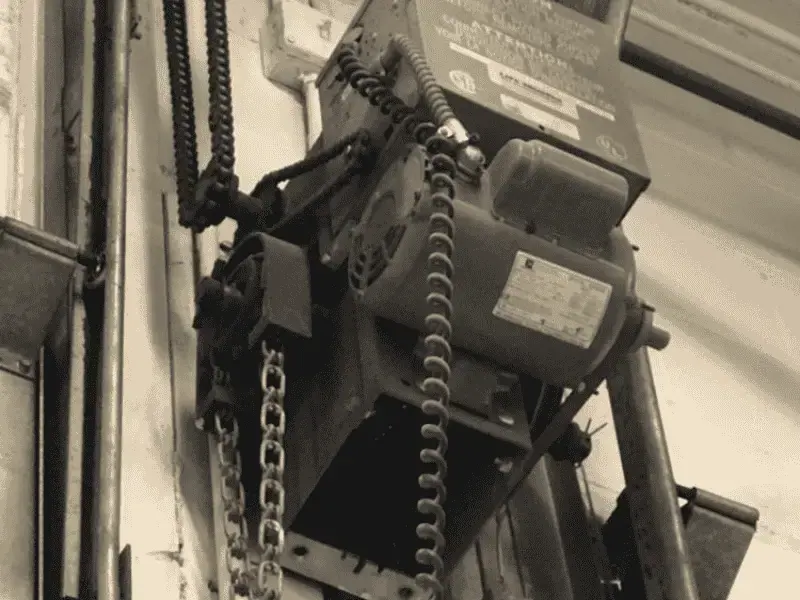
Garage door opener repair in Burnaby should therefore begin with the whole system. The door’s balance and travel are checked before the remote, wall control, photo eyes, trolley, rail, drive components, settings and motor are blamed.
This distinction helps avoid replacing an opener when the actual fault is a broken spring, damaged cable, binding track or disconnected trolley. It also prevents repeated operation from placing more load on the door and opener.
Start with the symptom
One symptom can have several causes. These examples narrow the starting point without pretending to diagnose the unit remotely.
Power supply, wall control wiring, lock mode, logic board, motor protection or an internal electrical fault may need to be checked.
The issue may involve the remote battery, programming, radio interference, antenna, remote hardware or the opener’s receiver.
Look for an obstruction or photo-eye problem. Door resistance, travel settings and opener safety response may also require testing.
A disconnected trolley, worn drive component or door-system failure can produce this symptom. A broken spring must be ruled out.
Door balance, track resistance, travel limits, drive wear, overheating or an obstruction can interrupt movement.
A heavy door, jammed mechanism, failed starting component, damaged gear or motor problem may be involved. Do not keep cycling it.
Safe first checks
These checks are intended for a door that remains level, supported and free of visible spring or cable damage.
Manual release caution: Use the emergency release only when the door is fully closed and stable, following the opener manual. A door with failed springs can be extremely heavy and may fall or move unexpectedly.
System-by-system diagnosis
The exact checks depend on the opener model, drive type, door condition and symptom.
Wall station, remotes, keypad, lock mode, antenna, programming and receiver response are compared to identify whether the problem is limited to one control.
Sensor alignment, mounting, lens condition, wiring and indicator behaviour are checked. Non-contact reversal and contact reversal should follow the manufacturer’s test procedure.
The trolley connection, chain, belt or screw-drive components, sprocket and rail movement are reviewed for disconnection, wear or binding.
Opening and closing limits are assessed with door movement. Settings should not be used to overpower a heavy, damaged or binding door.
Motor response, gears, capacitors where applicable, logic board and other model-specific components may require testing after external causes are ruled out.
Springs, cables, rollers, tracks and manual movement are checked because a mechanical door fault can imitate an opener failure.
Safety functions matter
Automatic openers use safety systems intended to detect an obstruction and reverse or prevent closing. A door that closes only while the wall button is held, reverses unexpectedly or ignores an obstruction needs diagnosis rather than a setting change made by guesswork.
Non-Contact Photo-Eye Test
Follow the opener manual and interrupt the sensor beam while closing. The opener should prevent or reverse downward travel as specified for that model.
Dirty lenses, misalignment, loose brackets, wiring faults and failed sensors can affect the result.
Contact-Reversal Test
Use the manufacturer’s specified test object and procedure. The door should reverse after contacting the object.
If either safety test fails, stop automatic operation until the cause is corrected. Do not increase force simply to make the door close.
Repair or replacement
The decision should be based on diagnosis, compatible parts, safety features and the overall condition of the door—not age or price alone.
Repair May Make Sense When
Replacement May Deserve Consideration When
A new opener will not correct a broken spring, damaged cable or binding track. Those door problems must be repaired so the replacement unit is not asked to move an unsafe or unbalanced load.
Local service context
Garage door opener repair in Burnaby serves a mix of detached homes, townhomes, attached garages and shared-property settings. The access arrangement and door use can affect both diagnosis and the repair decision.
For an attached garage used as a regular household entrance, describe intermittent faults even if the opener works during the appointment. For townhome or strata property, confirm responsibility and approval before changing shared equipment, wiring or access controls.
Service is focused on Burnaby neighbourhoods including Brentwood, Metrotown, Burnaby Heights, Capitol Hill, Deer Lake, Edmonds, South Slope and nearby communities. Provide the exact address or postal code so current availability can be confirmed.
Understanding the quote
A symptom alone is not enough for an accurate price. The cost depends on the diagnosed fault and whether the door itself also needs work.
Clear diagnostic sequence
The wall control, remote, keypad, indicator lights and door response are compared.
Door balance, springs, cables, tracks and manual movement are reviewed before loading the opener.
Sensors, wiring, travel behaviour, trolley, drive parts and model-specific components are checked as needed.
Repair and replacement options are explained, followed by travel and applicable safety-function testing.
Common homeowner questions
The trolley may be disconnected, a drive component may be damaged, or the door may have a broken spring or another mechanical problem. Stop repeated operation and check the door from a safe position rather than assuming the motor is the cause.
A blocked or misaligned photo eye, resistance in the door, an obstruction, or incorrect travel settings can cause reversal. Clean the sensor lenses and clear the opening, but arrange diagnosis if the problem continues or the door binds.
Possible causes include a depleted remote battery, a lost programming connection, radio interference, a damaged remote, vacation-lock mode or a receiver problem. The opener model and indicator lights can help narrow the cause.
It should not be used to force a door with a broken spring. The spring system counterbalances the door; without that support, the opener can be overloaded and the door may move unpredictably.
Some problems are caused by dirt, obstruction, loose mounting or misalignment. Wiring, failed sensor hardware and recurring alignment problems require further diagnosis. The door should not be operated automatically if the safety system does not respond correctly.
Repair may be practical when the fault is identifiable, compatible parts are available and the unit otherwise operates safely. Replacement deserves consideration when major parts are unavailable, failures repeat, the unit lacks current safety features or repair cost approaches a suitable replacement.
Share the opener brand and model if visible, what happens from the wall control and remote, the position of the door, indicator-light patterns, recent power interruptions and whether the door feels heavy or moves unevenly.
Related door problems
The correct service depends on whether the fault begins in the opener or the moving door system.
For preventive inspection, balance checks, suitable lubrication and safety testing when the door remains stable.
View Maintenance →For a heavy door, visible spring gap or opener that strains because the door is no longer counterbalanced.
View Spring Service →For scraping, binding, bent track or door resistance that interrupts automatic movement.
View Track Repair →Supporting homeowner resources
Use these guides to understand the symptom and prepare useful details before requesting service.
Compare the remote, wall control and door response to narrow the fault.
Read Guide →Separate power, remote, sensor, drive and door-balance problems.
Read Guide →Check the beam, lenses, alignment and model-specific indicators safely.
Read Guide →Follow the symptom from controls to springs, cables, tracks and the opener.
Read Guide →Use safety, condition, compatible parts and recurring faults to compare repair with replacement.
Read Lifespan Guide →Follow a safety-first decision path before using the opener’s emergency release.
Read Power Outage Guide →Request service in Burnaby
Tell us what happens from each control, whether the motor makes a sound and whether the door is open, closed or stuck. Mention visible spring, cable or track damage first.