Serving Burnaby, BC

Maintenance guide for Burnaby homeowners

Why Is My Garage Door So Noisy?

Rattling, squeaking, grinding and popping sounds point to different parts of the system. Use the sound and the door’s movement to decide whether the next step is routine maintenance or repair.

The short answer

Noise Is A Symptom Rather Than A Diagnosis

A garage door can become noisy because hinges need suitable lubrication, rollers are worn, fasteners have loosened, a track is damaged or the opener is transferring vibration into the ceiling. A sharp bang, sudden scraping or noise combined with uneven travel deserves faster attention than a mild squeak on an otherwise stable door.

Listen from a safe distance during one complete cycle. Do not stand beneath the moving door or touch springs, cables, drums, bottom brackets or loaded track supports.

Stop operating the door if it becomes crooked, unusually heavy, leaves the track, shows a spring gap or has a loose or frayed cable.
Match the sound to the system

Common Garage Door Noises And Likely Causes

Squeaking

Dry hinge pivots, metal rollers or bearings may squeak. Use only the product and lubrication points approved for the installed door.

Rattling

Loose non-tensioned fasteners, worn rollers, vibration from the opener or movement in door sections can create a repeated rattle.

Grinding

A binding roller, damaged bearing, misaligned track or opener drive problem can create grinding. Stop if movement also becomes rough.

Scraping

Scraping can occur when a roller contacts a bent track, a door section rubs hardware or the door moves out of level.

Popping

A popping sound may come from stressed hinges, rollers crossing damaged track, door sections flexing or spring-related movement.

Humming

An opener that hums without moving the door may have a drive fault, but a heavy door or broken spring can also overload it.

Start with observation

Check Hinges Rollers And Fasteners

With the door fully closed and the opener idle, look for visibly loose ordinary hinge screws, worn roller wheels, cracked hinges or metal dust near repeated contact points. Do not loosen the bottom fixture because the lift cable connects in that area and may carry significant tension.

Nylon rollers can become chipped or develop bearing wear. Steel rollers can become noisy when their bearings or stems deteriorate. Replacement selection depends on roller size, stem length, door weight and track design.

If the door is level and stable, a professional garage door maintenance visit in Burnaby can separate ordinary wear from a developing cable, spring, track or opener problem.

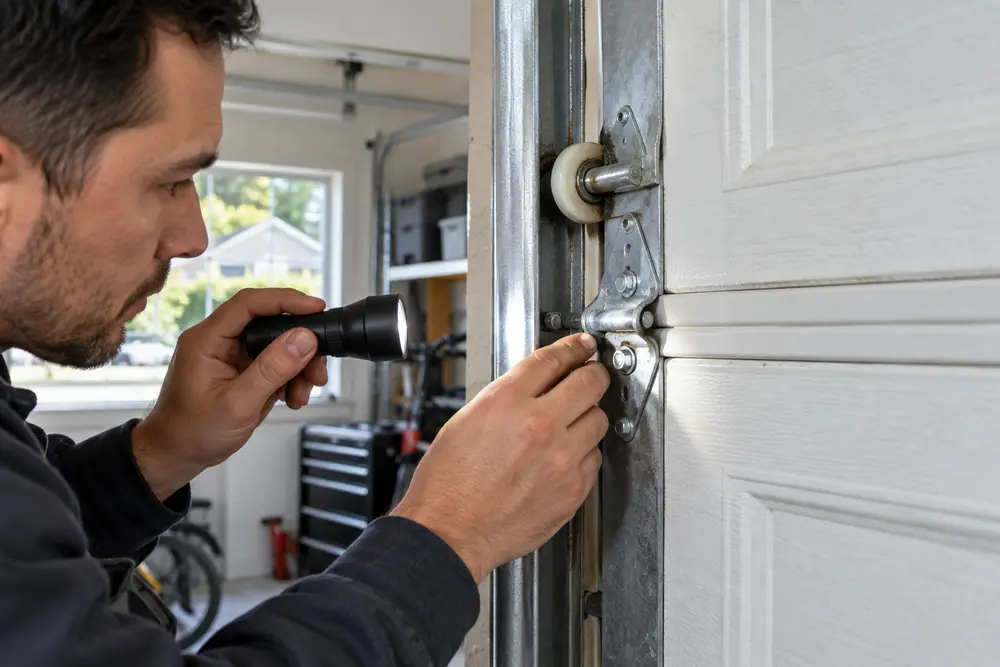
Technician inspecting garage door hinges and rollers for a noise source
Hinges and rollers should be inspected without disturbing tensioned lifting hardware.
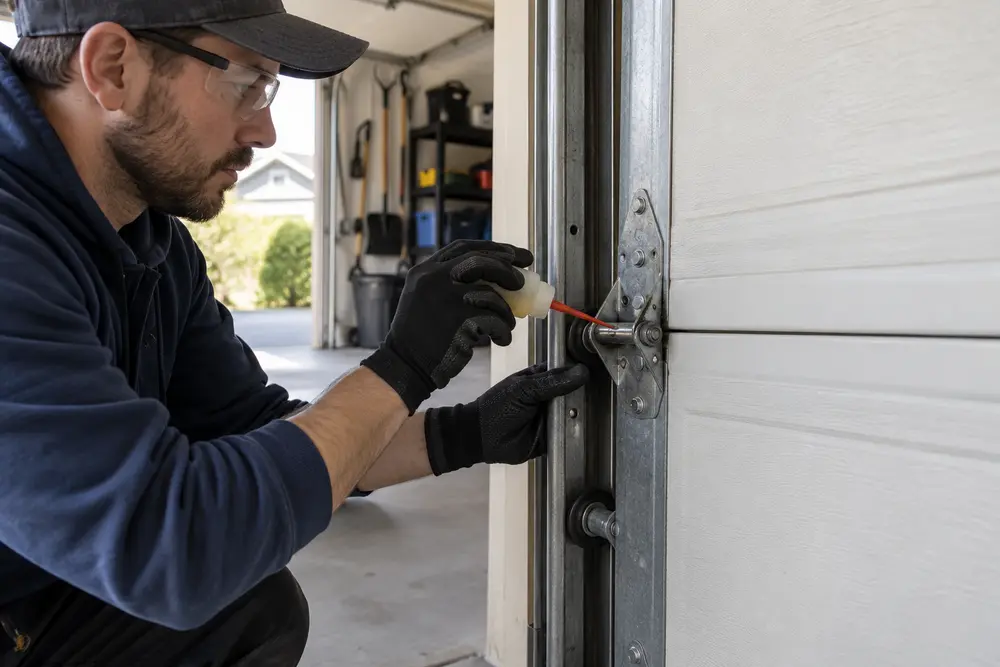
Suitable lubricant applied lightly to a garage door hinge pivot while the track remains dry
A light application at approved pivot points is different from coating the tracks with grease.

Use the right product in the right place

Lubrication Can Help But It Cannot Repair Damage

Manufacturer guidance commonly identifies hinge pivots, specified bearings and suitable roller points for light lubrication. Tracks are generally kept clean and dry so grease does not collect grit and interfere with roller travel.

Lubrication will not straighten a bent track, restore a frayed cable, rebalance a spring system or repair an opener motor. If the noise returns quickly, appears only at one position or comes with jerking movement, the underlying cause needs diagnosis.

See the garage door lubrication guide for safe product and component guidance.

Local operating conditions

Why Noise Can Change During Burnaby’s Wet Season

Moisture, road grit and debris carried into a garage can change the way rollers and lower tracks behave. Cooler temperatures may also make old lubricant feel thicker. These conditions can reveal an existing wear problem, but weather alone should not be treated as the diagnosis.

Reasonable Homeowner Checks

  • Keep the floor and track path clear
  • Watch whether the bottom edge remains level
  • Note exactly where in the cycle the sound occurs
  • Clean photo-eye lenses with a soft cloth
  • Follow the manufacturer’s maintenance instructions

Reasons To Request Service

  • Noise begins after an impact
  • The door shudders or changes speed
  • A roller rubs or leaves the track
  • A cable hangs loose or shows broken strands
  • The opener strains while the door feels heavy

Noise questions

Noisy Garage Door FAQs

Is a noisy garage door dangerous?

Not every sound indicates immediate danger, but noise combined with crooked travel, a heavy door, a spring gap, frayed cable or displaced roller is a reason to stop operation and request inspection.

Can I use WD-40 on a noisy garage door?

A general water-displacement product is not a substitute for the lubricant specified by the door manufacturer. Use the approved product only at approved points and keep tracks clean.

Why is my garage door louder when closing?

The door may load rollers and hinges differently during descent. A specific noisy point can indicate a rough roller, track contact, loose hardware or opener travel issue.

Will replacing the rollers make the door quiet?

It can reduce noise when worn rollers are the cause, but the complete system should be checked first so a track, hinge, spring, cable or opener problem is not overlooked.

Garage door maintenance in Burnaby

Find The Source Before The Noise Gets Worse

Describe the sound, where it occurs and whether the door remains level. We can match the symptom to the appropriate service.