Serving Burnaby, BC

Maintenance planning for Burnaby homeowners

How Often Should A Garage Door Be Serviced?

Use an annual professional inspection as a practical baseline, then adjust the schedule for daily use, operating conditions and any change in the way the door moves.

The short answer

Most Residential Doors Benefit From Annual Service

For many residential garage doors, a professional inspection once a year is a sensible starting point. Manufacturer guidance commonly recommends annual maintenance, while some doors may benefit from semi-annual checks when they operate frequently or face demanding conditions.

The calendar is only a baseline. A door that suddenly becomes heavy, crooked, noisy or inconsistent should be inspected when the change appears—not months later because the planned service date has not arrived.

Practical schedule: Observe the door regularly, perform only manufacturer-approved homeowner checks, arrange professional service about once a year, and bring that visit forward when usage or symptoms justify it.
One schedule does not fit every home

What Determines The Right Service Interval?

The number of operating cycles and the condition of the complete system matter more than the age of the calendar alone.

Daily Use

A door used as the household’s main entrance completes more cycles than a garage opened only a few times per week. Higher use can justify more frequent inspection.

Door Weight And Construction

Large, insulated, glazed or reinforced doors place different demands on springs, cables, rollers and the opener. Correct balance remains essential.

System Age

Older components may need closer observation, but age alone does not diagnose failure. Service history and current condition provide better context.

Operating Environment

Dampness, debris, temperature changes and storage near tracks can affect visible hardware, seals, sensor paths and roller travel.

Previous Repairs

A recent spring, cable, track or opener repair may come with specific follow-up guidance. Keep the service record and component information.

New Symptoms

Noise, hesitation, uneven movement or visible damage overrides the normal timetable and calls for diagnosis before further wear develops.

A quick habit between service visits

What To Observe Each Month

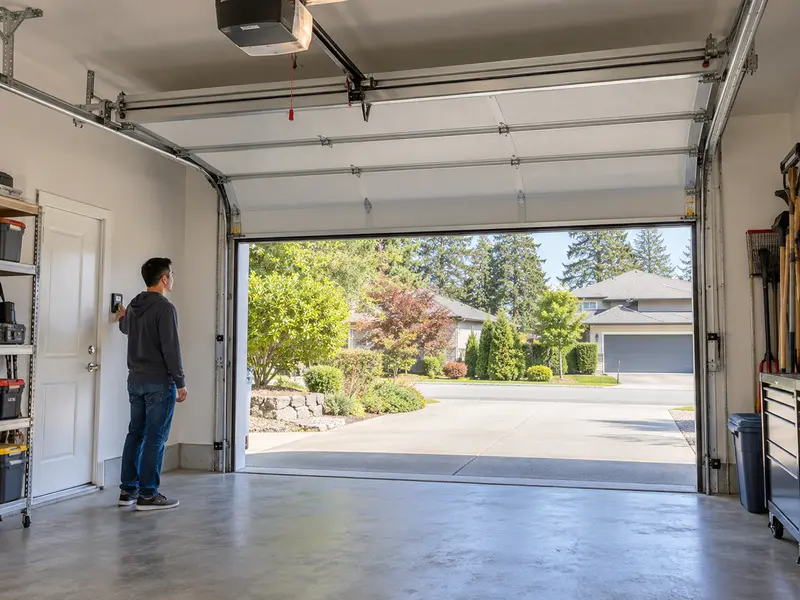
Stand inside the garage at a safe distance and watch one complete opening and closing cycle. The goal is observation—not adjustment.

  • Does the bottom edge remain level?
  • Do rollers stay seated and move without binding?
  • Is there new scraping, grinding, popping or rattling?
  • Does the opener start, travel and stop consistently?
  • Are the photo-eye lenses clear and aligned?
  • Can you see frayed cable strands, a spring gap or loose hardware?

Stop automatic operation if the door becomes crooked, unusually heavy or visibly disconnected from its lifting hardware. Use the relevant guide or service page to understand the next safe step.

Homeowner safely observing a garage door opening cycle from the wall control
Monthly observation can reveal changes in level travel, sound and opener response.

Know where homeowner maintenance ends

Safe Homeowner Checks Versus Professional Service

Reasonable Homeowner Tasks

  • Watch and listen to a complete operating cycle
  • Keep the floor and track area free of stored items
  • Clean photo-eye lenses with a soft cloth
  • Inspect visible parts without touching tensioned hardware
  • Follow the opener manual for safety-reversal testing
  • Use only the lubricant and points specified by the manufacturer

Leave These To A Technician

  • Spring winding or tension adjustment
  • Cable, drum or bottom-bracket work
  • Moving loaded track brackets
  • Forcing rollers back into damaged rails
  • Door-weight and counterbalance correction
  • Electrical diagnosis inside the opener

Safety reminder: A closed door can still leave springs, cables, drums and bottom fixtures under significant tension. Do not loosen them as part of routine maintenance.

More than a can of lubricant

What A Professional Maintenance Visit Can Include

The exact scope depends on the door and manufacturer instructions, but a useful inspection treats the door and opener as connected systems.

Door Balance And Travel

Manual movement and practical hold points help show whether the counterbalance system supports the door correctly.

Springs And Cables

Visible condition, attachment, cable seating and signs of abnormal wear are reviewed without making unsupported lifespan promises.

Rollers, Hinges And Tracks

Roller movement, hinge condition, track alignment, fasteners and repeated contact points are checked for friction or looseness.

Opener And Safety Response

Travel, attachment, controls, photo eyes and relevant reversal functions are checked according to the installed opener’s instructions.

Seals And Door Sections

Bottom and perimeter seals, panel condition, reinforcement and visible gaps are reviewed for changes affecting operation or weather protection.

Suitable Lubrication

Specified pivot, bearing or roller points may receive an appropriate product. Tracks are cleaned rather than packed with grease that collects debris.

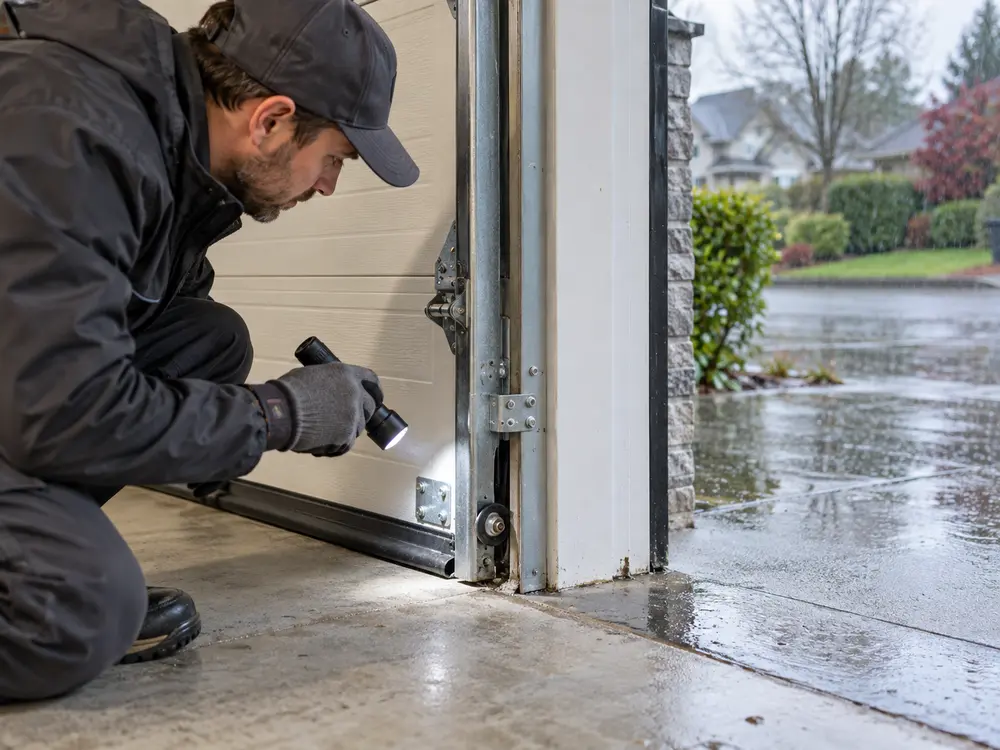
Technician inspecting lower garage door track and weather seal beside a wet driveway
Wet-season checks focus on exposed hardware, debris, drainage and weather seals without assuming moisture caused a failure.

Local scheduling context

Maintenance Planning For Burnaby’s Wet Season

Burnaby homeowners often deal with extended wet conditions, water carried in by vehicles and debris collecting near the garage entrance. Those conditions do not automatically damage a garage door, but they make seasonal observation useful.

Before and during wetter months, check the lower tracks for debris, inspect the bottom seal for gaps or damage and look for visible corrosion on exposed fasteners or cable strands. Keep stored items away from tracks and photo eyes.

Homes in Brentwood, Metrotown, Burnaby Heights, Capitol Hill, Deer Lake, Edmonds and South Slope may have different garage layouts, slopes and exposure. The maintenance schedule should reflect the actual door rather than relying on the neighbourhood name alone.

Do not wait for the annual appointment

Warning Signs That Require Earlier Attention

Service should be brought forward whenever operation changes or safety-related damage becomes visible.

Movement And Balance Changes

  • The door becomes unusually heavy
  • One side rises before the other
  • The door drops, shoots upward or will not hold position
  • Rollers bind or leave the track
  • The opener strains or stops partway

Visible Or Audible Changes

  • A gap appears in a torsion spring
  • A lift cable frays, hangs loose or leaves its drum
  • Track, hinge or panel damage appears
  • New grinding, scraping or sharp popping develops
  • Photo-eye or contact reversal testing fails

Service-frequency questions

Garage Door Maintenance Questions

How often should a residential garage door be professionally serviced?

An annual professional inspection is a practical baseline for many residential garage doors. A high-use door, a door exposed to demanding conditions or one showing changes in movement, noise or balance may need attention sooner.

Should a garage door be checked more often if it is used as the main entrance?

Yes. More daily cycles increase wear on rollers, hinges, springs, cables and opener components. A busy household may benefit from semi-annual professional inspection and regular homeowner observation between visits.

What garage door checks can a homeowner safely do?

Homeowners can watch and listen to a complete cycle, inspect visible hardware from a safe distance, keep the photo-eye path clear and follow the manufacturer’s safety-test instructions. Do not adjust springs, cables, drums or bottom brackets.

Does a quiet garage door still need maintenance?

Yes. Some wear develops before it becomes noisy. Periodic inspection can identify loose hardware, changing balance, cable wear, seal damage or safety-function problems that are not obvious during normal use.

When should I service the door before the annual date?

Arrange an earlier inspection if the door becomes heavy, crooked, slower, louder, inconsistent or difficult to open, or if you see a spring gap, frayed cable, displaced roller, bent track or failed safety reversal.

Is lubrication the same as professional garage door service?

No. Suitable lubrication is only one maintenance task. A service visit may also assess balance, springs, cables, rollers, hinges, tracks, fasteners, seals, opener travel and relevant safety functions.

Further reading

Sources And Manufacturer Guidance

This guide uses manufacturer maintenance guidance as a general baseline. Always follow the instructions for your specific door and opener.

Maintenance service in Burnaby

Plan Your Next Garage Door Inspection

Tell us how often the door is used, what has changed and when it was last serviced. Availability is confirmed when you contact us.