Serving Burnaby, BC

Spring safety guide for Burnaby homeowners

Signs A Garage Door Spring Is Failing

A heavy door, uneven balance, stretched coils or a sudden change in opener effort can indicate a counterbalance problem. Learn which signs require immediate professional inspection.

The short answer

Spring Problems Often Appear As Balance Problems

Garage door springs counterbalance much of the door’s weight. When a spring loses strength, breaks or no longer matches the door correctly, the opener may strain, the door may feel heavy or movement may become uneven.

Some spring failures happen suddenly, while others show visible wear or changing performance first. Never test a suspected spring by touching, stretching or adjusting it.

Immediate action: If you see a gap in a torsion spring, a separated extension spring, a loose cable or a door that cannot remain level, stop using the opener and keep people clear.
Six practical indicators

Warning Signs To Watch For

The Door Feels Heavy

A properly balanced door should not place its full weight on the opener. Sudden heaviness can indicate lost spring support.

The Opener Strains

Slower travel, humming or repeated stopping may occur when the opener is trying to lift a door with inadequate counterbalance.

The Door Rises Unevenly

Uneven movement can involve springs, cables or drums. Continued operation can pull rollers and tracks out of alignment.

A Coil Gap Appears

A clear gap in a torsion spring above the door commonly indicates that the spring has broken.

The Door Will Not Hold Position

A door that drops, shoots upward or will not stay at a safe test position needs professional balance assessment.

New Sharp Sounds Develop

A loud bang, snapping sound or repeated spring noise followed by changed movement requires inspection before reuse.

Visible condition matters

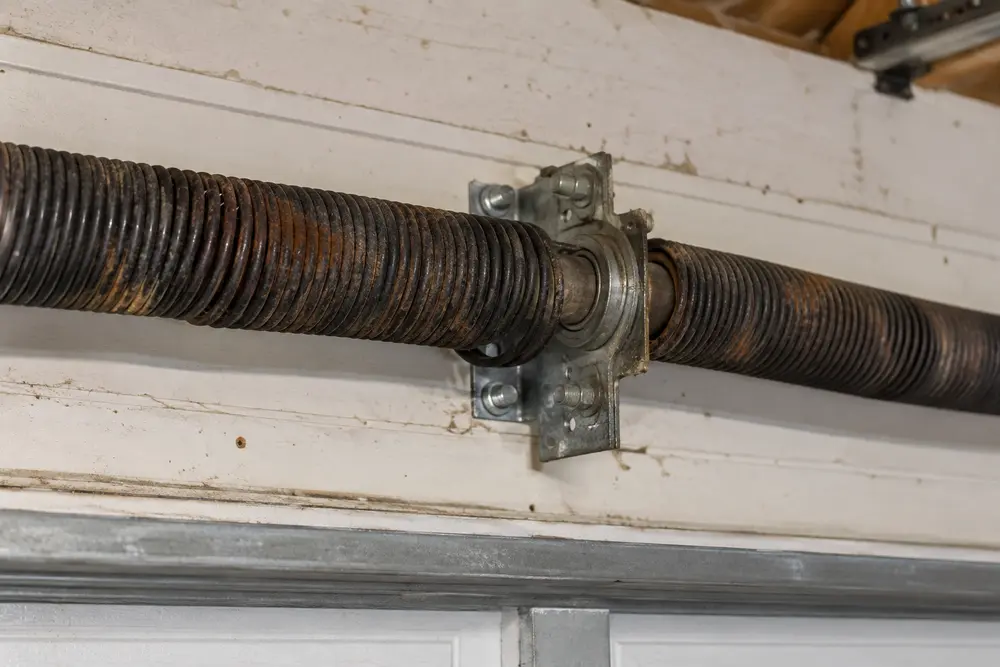
Look For Corrosion Distortion And Uneven Coils

Surface oxidation does not prove that a spring is about to break, but corrosion can accompany age, moisture exposure and wear. Also look for stretched sections, inconsistent coil spacing, damaged mounting hardware or evidence that the spring has shifted.

Do not apply force, loosen the centre bearing plate or touch winding cones. Spring size and installation must match the door’s weight, height, drum configuration and intended cycle rating.

For more context, read why garage door springs break and how long garage door springs last.

Aged torsion spring with surface corrosion being visually inspected
Visible wear supports a diagnosis, but spring condition cannot be judged safely by touch.
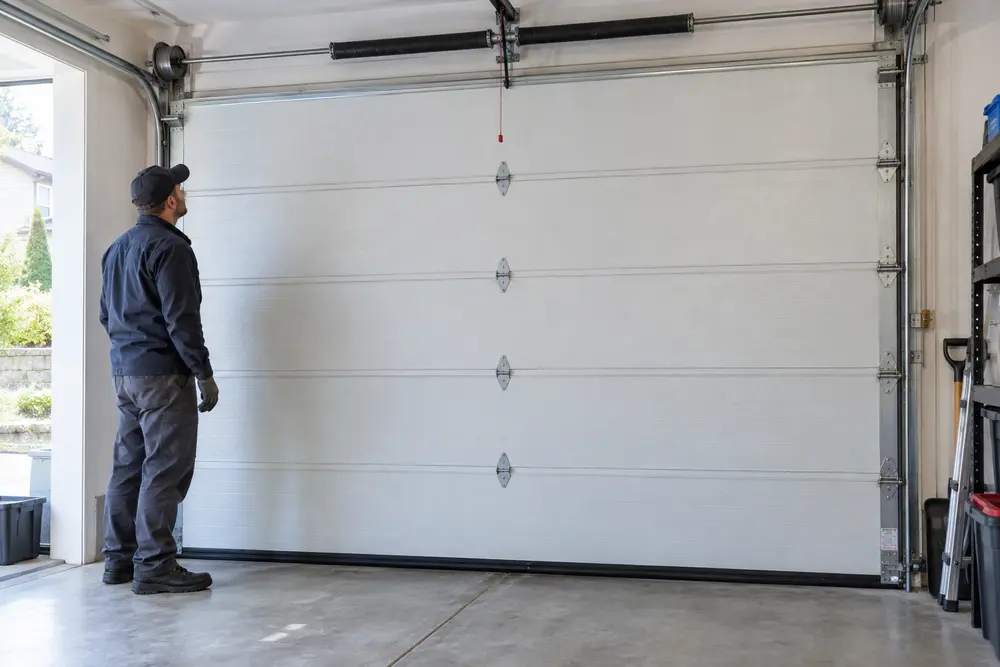
Technician observing whether a closed garage door sits level during a balance inspection
A level door helps identify whether springs, cables and drums are sharing load correctly.

Related parts can imitate spring trouble

Why A Complete Balance Inspection Matters

A door can become heavy or crooked because of a broken spring, but cable damage, drum seating, binding rollers and track resistance can produce similar symptoms. Replacing a part before identifying the cause can leave the door unsafe or poorly balanced.

A technician should identify the installed spring system, door weight, number of springs, cable condition, drum configuration and manual travel before recommending replacement.

If the door hangs lower on one side, review the guide to a crooked garage door as well as the dedicated cable and track services.

Know where to stop

Safe Observation Versus Unsafe Spring Work

Safe From A Distance

  • Note whether the door is open, closed or between positions
  • Look for a visible torsion-spring gap
  • Observe whether the bottom edge is level
  • Describe sounds and changes in opener effort
  • Keep people, pets and vehicles away

Do Not Attempt

  • Winding or unwinding a torsion spring
  • Stretching an extension spring
  • Loosening cables, drums or bottom brackets
  • Using makeshift winding tools
  • Disconnecting an open or unstable door

Burnaby service context

Moisture Use And Door Weight Affect The Decision

Burnaby’s damp seasons can contribute to visible corrosion on exposed hardware, but spring life is still shaped mainly by operating cycles, correct sizing, door balance, installation and the condition of connected components. A frequently used insulated double door completes more cycles and carries a different load from a lightly used single door.

The replacement decision should be based on the actual door system rather than a generic promise that every spring lasts the same number of years.

Spring questions

Garage Door Spring Failure FAQs

Can a garage door spring fail without warning?

Yes. Repeated cycles can cause fatigue until the spring breaks suddenly. Some systems show corrosion, noise or balance changes first, but those signs are not guaranteed.

Can I keep using the opener with a weak spring?

No. The opener is not designed to replace the counterbalance system. Continued use can overload the operator and worsen uneven movement.

Does a rusty spring need immediate replacement?

Surface rust alone does not establish remaining life. It should be evaluated with cycle history, balance, coil condition, spring sizing and the rest of the lifting system.

Should both springs be replaced together?

When a matched pair has the same age and cycle history, replacing both may be recommended. The technician should explain the installed configuration and options.

Garage door spring service in Burnaby

Stop Testing A Door That Has Lost Balance

Tell us what changed, whether the door is level and whether a spring gap or loose cable is visible.