Serving Burnaby, BC

Practical maintenance for Burnaby homes

Garage Door Lubrication: What Should You Lubricate?

The right lubricant in the right places can reduce friction and noise. The wrong product—or lubricant on the tracks—can attract dirt and create new problems.

Understand the system first

Lubrication Is Only One Part Of Maintenance

Garage doors combine rollers, hinges, bearings, springs, cables and an opener. Some moving metal joints benefit from a light application of a suitable garage-door lubricant, but lubrication cannot correct a loose cable, damaged roller, bent track or unbalanced door.

For Burnaby homes, moisture and seasonal temperature changes make periodic inspection worthwhile. Start with the door closed, disconnect electrical power if you are working near opener components and never loosen spring, cable or bottom-bracket hardware.

Safety note: do not touch, adjust or lubricate a visibly broken spring, frayed cable or loose bottom bracket. These parts can remain under dangerous tension.
Target moving contact points

What To Lubricate On A Garage Door

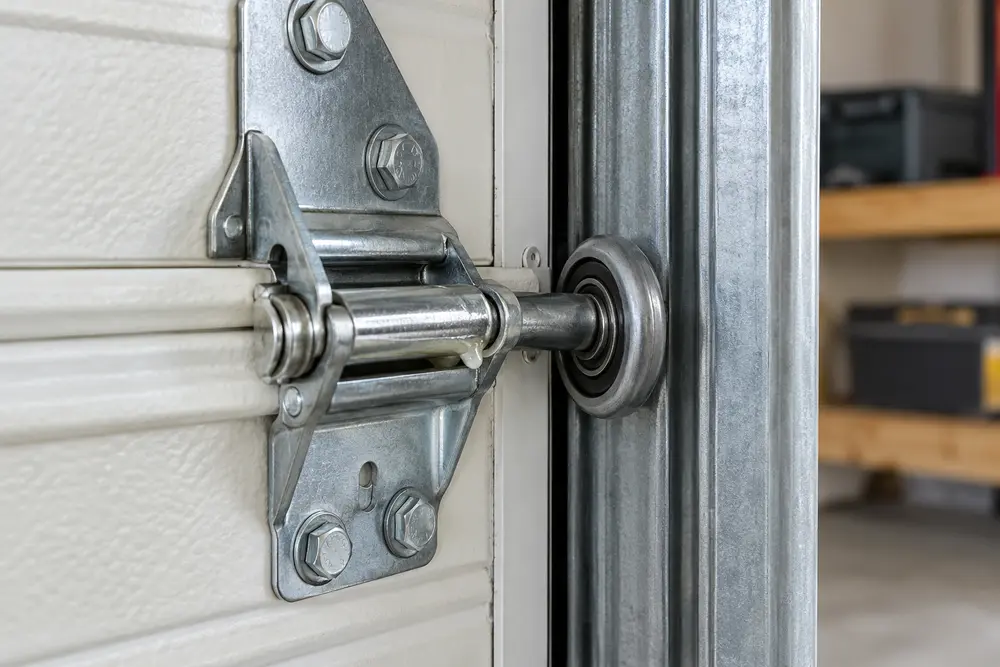
Steel Roller Bearings

Apply a small amount to the bearing area. Avoid getting lubricant on nylon roller surfaces unless the manufacturer says otherwise.

Hinge Pivot Points

A light application where metal hinge leaves rotate can reduce friction and squeaking.

Torsion Spring Surface

Where permitted by the door manufacturer, a light film can help limit coil friction and surface corrosion.

End And Centre Bearings

Accessible bearing points may benefit from suitable lubricant, but covers and spring hardware should not be removed.

Lock And Arm Pivots

Manual lock mechanisms and opener arm pivots can be treated sparingly when they are clean and undamaged.

Manufacturer-Approved Points

The door and opener manuals take priority because materials and designs vary.

Look closely, act safely

Use A Product Made For Garage Doors

Choose a non-silicone or silicone-based garage-door spray, or white lithium product, when it is recommended by the manufacturer. Apply it precisely and wipe away excess. Heavy automotive grease and penetrating water-displacement products are not universal substitutes.

  • Clean dust from the component first
  • Use the applicator straw for control
  • Apply a thin coat instead of saturating parts
  • Cycle the door only when it is safe and balanced
  • Wipe drips from the door and floor
Technician applying garage door lubricant to a steel roller hinge in a Burnaby garage
A small, controlled application at moving joints is more useful than spraying the entire door.
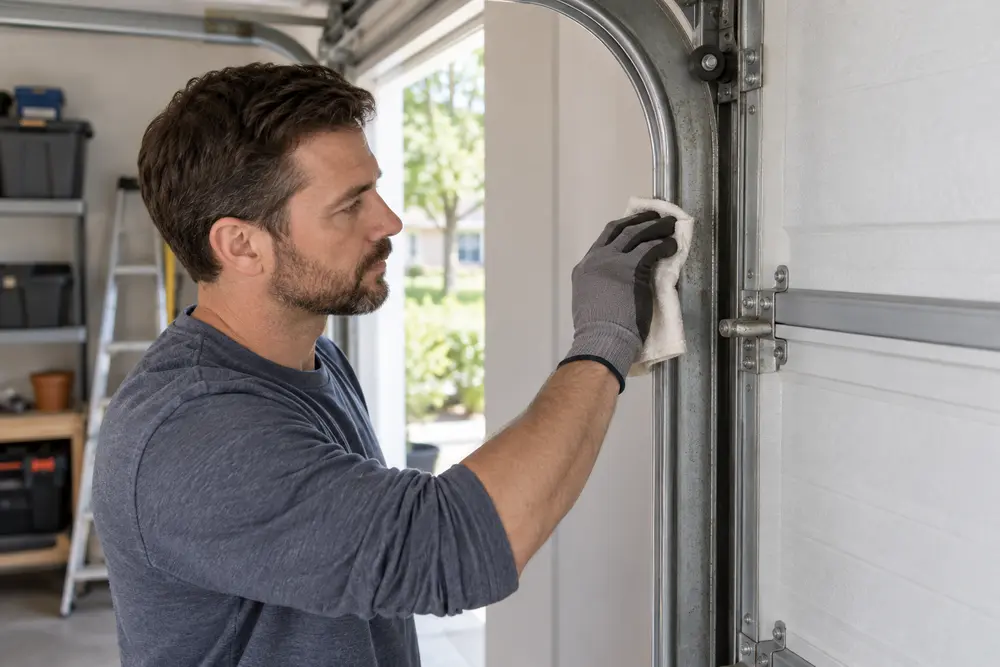
Clean galvanized garage door track being wiped with a dry cloth
Tracks should generally be kept clean and dry rather than coated with grease.

The practical next step

Do Not Grease The Tracks

Garage door rollers need a clean path. Grease on the vertical or horizontal tracks can capture grit, contaminate roller surfaces and encourage sliding instead of rolling. Wipe loose dirt from the inside of the track with a dry cloth; do not alter track alignment.

If a roller binds, the door rubs or a track looks bent, stop using the door and review garage door track repair. Lubricant will not straighten damaged metal.

Use this checklist

A Simple Burnaby Lubrication Routine

  1. Close the door and look for crooked movement, damaged rollers, loose hinges, cable wear or a spring gap.
  2. Clean accessible hinge, roller and track surfaces without removing load-bearing hardware.
  3. Confirm the lubricant is compatible with the door manufacturer’s instructions.
  4. Apply a small amount to approved moving points while keeping tracks and sensor lenses clean.
  5. Operate the door and listen for persistent scraping, popping or binding.
  6. Arrange maintenance if noise remains or the door no longer feels balanced.

Homeowner questions

Garage Door Lubrication FAQs

How often should I lubricate my garage door?

Follow the door manufacturer’s schedule and inspect the system regularly. Many doors benefit from periodic lubrication, but frequency depends on use, environment and component design.

Can I use WD-40 on garage door parts?

A general water-displacement product is not the same as a lasting garage-door lubricant. Use a product approved for the specific door components.

Should garage door tracks be lubricated?

Generally, no. Tracks should be clean and dry so rollers can travel correctly. Follow the manufacturer’s manual for any model-specific exception.

Will lubrication fix a noisy garage door?

It may reduce noise caused by dry moving joints, but it will not correct loose hardware, worn rollers, spring problems, track damage or opener faults.

Garage door service in Burnaby

Get The Cause Confirmed Before Parts Are Replaced

Describe what the door is doing, what changed and whether it is level. The repair path can then be based on the complete system.